T3
Colour

Colour #5: Pink, Olo and 4D colors

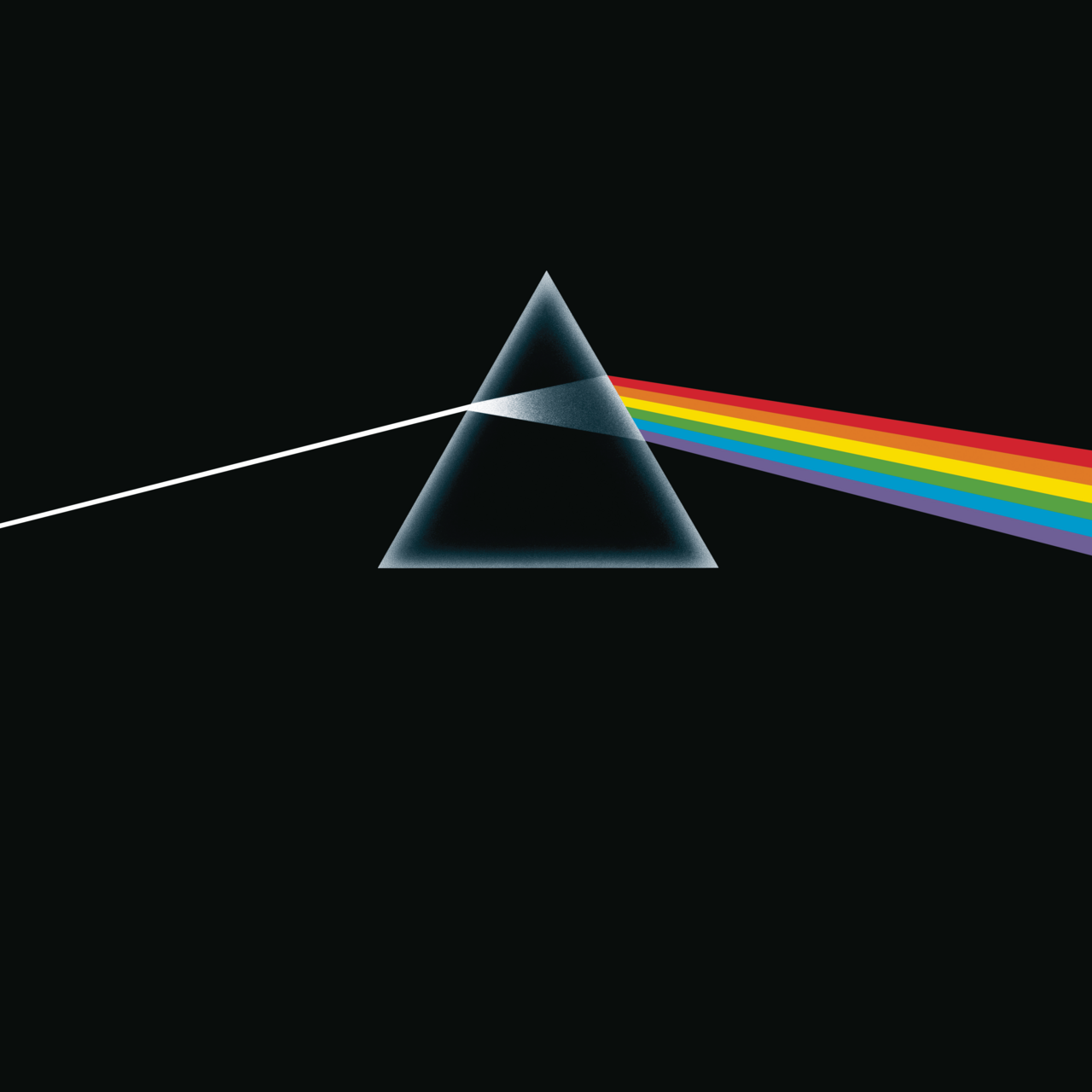
A beam of white light entering a glass prism and leaving it spread into a band of colour.
George Hardie, 1973
< 610
S
0.00
M
0.00
L
0.00
L'
0.00
> 625

The real world isn’t single wavelength

A single photon having a color is nice and all, but in bright daylight, around 4.000.000.000.000.000 photons of varying wavelengths will hit your retina every second — so we really need to look at the combined effect of multiple wavelengths hitting our cones to understand color in full.

In particular, two photons can stimulate cones in ways that a single photon cannot, leading to us seeing non-spectral colors.

Is pink a real color?

Above, look at the area where the S and L cones intersect. You’ll see that there are no wavelengths that will stimulate S and L without also stimulating the M cone.

A deep blue and a deep red photon hitting your eye at the same time will, however. When your brain gets the signal, it is left with no choice: Something that is S+L is usually cyan, but cyan would also stimulate M. This does not stimulate M, so it must be some distinct color then, and I guess that’ll be pink!

Is pink a real color?

Is pink a real color? Well, what is reality really. I hope by now you’ve seen that color is purely a fabrication of the brain — a messy way to reconstruct the EM spectrum from three overlapping detectors.

Pink is a distinct perceptual experience that we can have, and in that sense it is real — at least, no more or less real than blue.

Is olo a real color?

You can stimulate just the S cone via purple. You can stimulate just the L cone via red. But how do you stimulate just the M cone? It overlaps with the other cones everywhere, so it’s not something that is solvable by just shooting more frequencies of light at your eye.

Researchers at Berkeley came up with a way to do so in 2025 however: They mapped out people’s retinas to identify each S, M, and L cone inside, and then shot lasers at just the M cones.

The 5 test subjects described the experience as seeing a cyan that is more intense than any cyan they have ever seen before. The new color was dubbed “olo”, which I hear comes from “010”.

Is it real? Well, it is a distinct perceptual experience that we can have, and in that sense it is real — at least, no more or less real than pink.

Same colour, different light

There are infinitely different combinations of light that can produce the same color. Two sets of lights producing the same color are called metamers of each other.

The fact that we perceive light via three different detectors means that by just picking three wavelengths of light, preferably spaced out across the visible spectrum, we can mix any color that our eyes can see, even the non-spectral ones. This is what makes screens work!

Dichoptic Tetrachromacy

A particularly enterprising nerd called Ooquai has been building a pair of glasses with a filter on each eye. The left eye filters away all light > 610nm and the right eye filters away all light < 625nm, essentially giving him a fourth cone type that recognizes deep red light.

This gives him a fourth dimension of color vision, and many amazing opportunities to see more impossible colors like pink by stimulating each of the 4 cones in ways that are impossible with just 3. He calls this dichoptic tetrachromacy, and it is a fascinating way to explore the limits of human color perception.